
Bioidentical Hormones vs. Synthetic HRT: Understanding the Real Differences and What the Evidence Shows
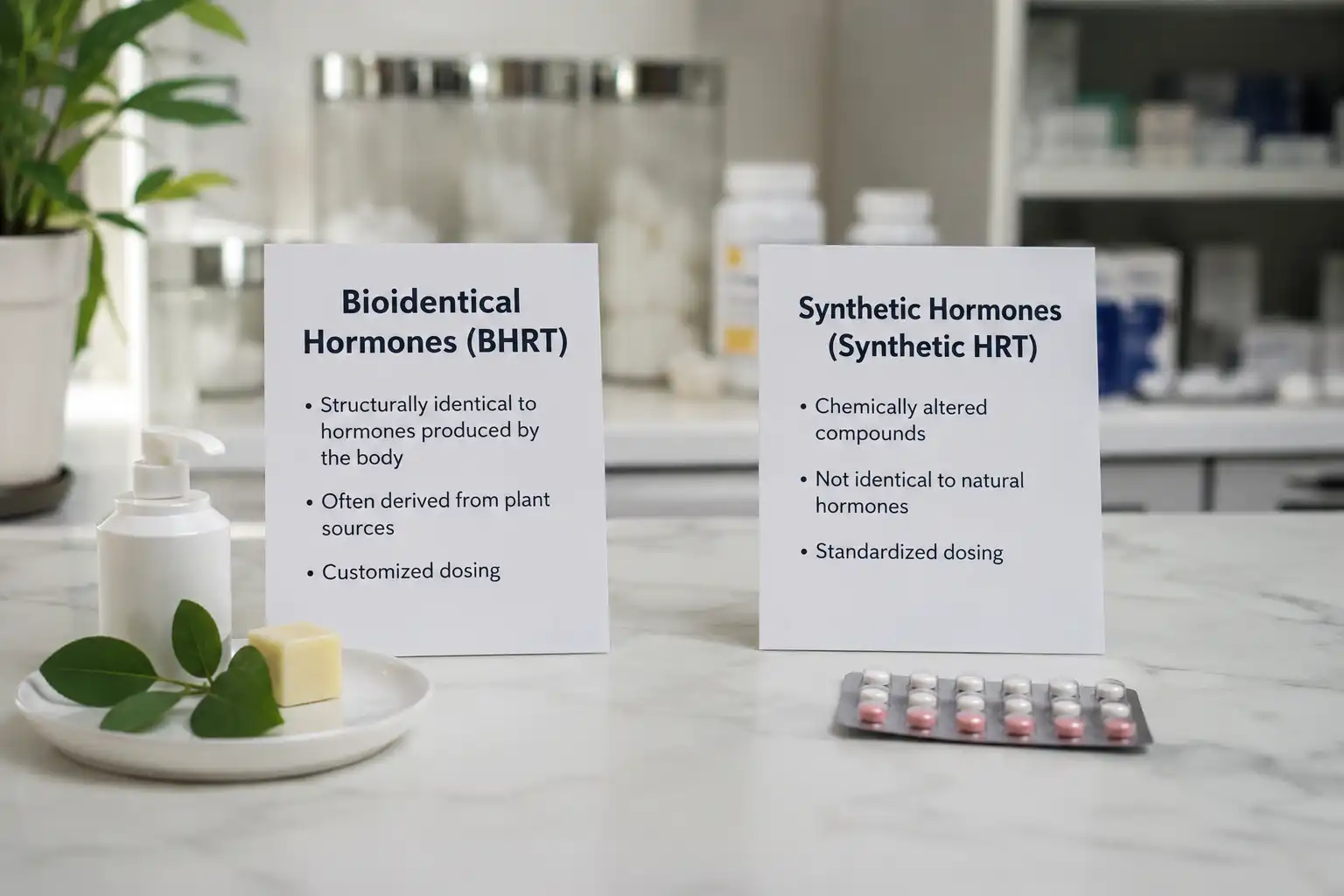
The debate between bioidentical and synthetic hormone replacement therapy has generated more confusion than almost any other topic in women’s health — and in men’s health too. On one side, mainstream medicine’s caution about HRT in general following the 2002 Women’s Health Initiative study. On the other, the growing functional medicine evidence base for individualized, bioidentical approaches. The truth is nuanced, the evidence is evolving, and the right answer depends significantly on the individual patient. Here’s what the science actually shows.
What “Bioidentical” Actually Means
The term bioidentical refers to hormones that are chemically identical in molecular structure to the hormones produced naturally by the human body. Bioidentical estradiol (17β-estradiol) is the exact same molecule as the estrogen your ovaries produce. Bioidentical progesterone is identical to the progesterone produced by the corpus luteum. This molecular identity is significant because it means the body’s receptors, transport proteins, and metabolic enzymes recognize and process these molecules exactly as they would endogenous hormones.
What Synthetic Hormones Are and Why They Were Used
Synthetic hormones — like medroxyprogesterone acetate (Provera) or conjugated equine estrogens (Premarin) — are molecules that activate estrogen or progesterone receptors but have different chemical structures from the hormones your body produces. They were developed largely because natural hormones couldn’t be reliably patented, and because they are more stable and predictable in manufacturing.
The Women’s Health Initiative: What It Actually Found
The 2002 WHI study used conjugated equine estrogens combined with medroxyprogesterone acetate — synthetic progestin, not bioidentical progesterone. The increased risks observed in that study (breast cancer, blood clots, stroke) are frequently generalized to all HRT, when in fact the evidence specifically involves these particular synthetic compounds. The WHI arm using estrogen alone (in women who had hysterectomies) actually showed a reduction in breast cancer risk — a finding that receives far less attention.
The Evidence for Bioidentical Progesterone vs. Synthetic Progestin
The distinction between bioidentical progesterone and synthetic progestin (like medroxyprogesterone acetate) is perhaps the most clinically important difference in this debate. Multiple studies, including the large French E3N cohort study, have found that women using bioidentical progesterone combined with estradiol did not have the same increased breast cancer risk as those using synthetic progestins. The KEEPS trial (Kronos Early Estrogen Prevention Study) also found favorable cardiovascular and cognitive profiles for bioidentical hormone therapy when initiated within 6 years of menopause onset.
- KEEPS trial: bioidentical estradiol and progesterone showed no adverse cardiovascular effects
- E3N cohort: bioidentical progesterone + estradiol showed no increased breast cancer risk vs. synthetic progestins
- Bioidentical progesterone has anxiolytic properties through GABA receptor modulation — not shared by synthetic progestins
- Sleep quality improvement is documented with bioidentical progesterone — not seen with synthetic versions
Compounded vs. FDA-Approved Bioidentical Hormones
Bioidentical hormones are available in both FDA-approved forms (Estrace, Prometrium, Vivelle-Dot) and as compounded preparations custom-made by a compounding pharmacy. Compounded bioidentical hormones allow dose customization based on laboratory testing — a significant advantage for patients requiring dosing outside standard pharmaceutical options. Dr. Gomes works with both FDA-approved and compounded bioidentical preparations, selecting the appropriate approach based on each patient’s specific hormonal profile and clinical needs.
How Dr. Gomes Approaches HRT Decision-Making
The decision about whether, when, and how to initiate hormone therapy is never taken lightly at Optimal Health & Wellness. Dr. Gomes evaluates each patient with comprehensive testing, reviews personal and family medical history, discusses individual risk factors and preferences, and monitors response carefully with regular lab follow-up. HRT is one tool in a comprehensive hormonal optimization protocol — it works best when combined with dietary interventions, gut health optimization, stress management, and lifestyle modifications that address the root causes of hormonal decline.
- Comprehensive baseline hormone panel before initiating any therapy
- Individual risk assessment: medical history, family history, current health status
- Regular monitoring: labs every 3–6 months to confirm optimal levels and adjust dosing
- Integration with dietary and lifestyle interventions for comprehensive hormonal health
- Patient education: shared decision-making based on current evidence, not fear or marketing
| If you’re considering hormone replacement therapy — or have questions about your current HRT protocol — schedule a comprehensive hormone consultation with Dr. Johnny Gomes, DO, FAAEM, IFMCP. In-office at Glen Alpine or Hickory, NC, or via telehealth across NC, TN, FL, GA, NJ, and PA. Call (828) 536-0320. |