
What Is Leaky Gut? The Science Behind Intestinal Permeability, Its Symptoms, and How to Actually Heal It
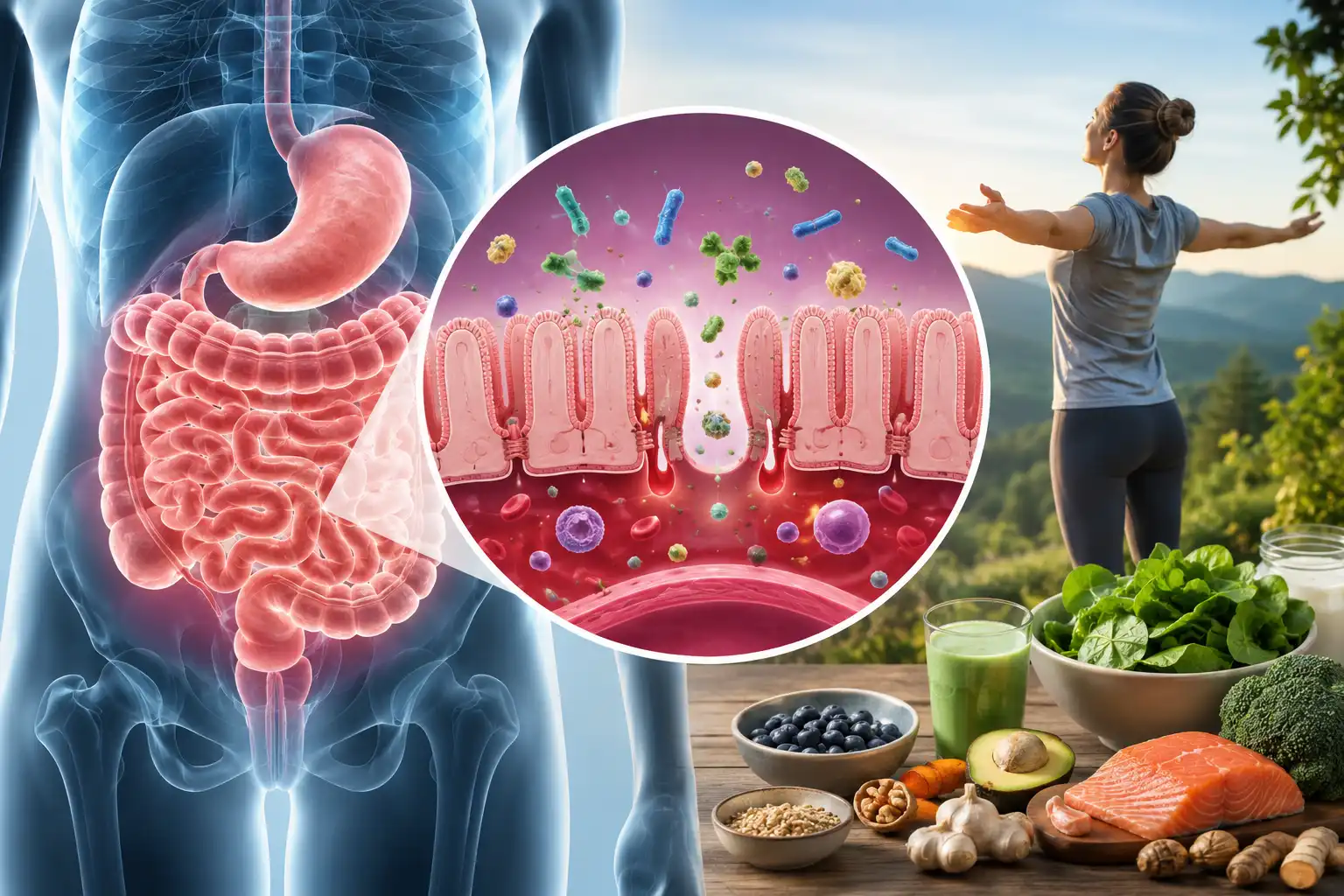
Leaky gut — or intestinal permeability — was once dismissed by mainstream medicine as a fringe concept. That has changed significantly. A growing body of peer-reviewed research now confirms that intestinal permeability is a measurable, real condition with profound implications for immune function, autoimmunity, neurological health, metabolic function, and systemic inflammation. Understanding what it is, what causes it, and how to address it is central to functional medicine’s approach to chronic disease.
Understanding the Intestinal Barrier
The lining of the small intestine is a single layer of epithelial cells connected by structures called tight junctions. These tight junctions act as gatekeepers, allowing properly digested nutrients — amino acids, fatty acids, simple sugars, vitamins, minerals — to pass through into the bloodstream, while keeping larger molecules, partially digested food proteins, bacterial toxins (lipopolysaccharides, or LPS), and pathogens out. When tight junctions are disrupted, this selective permeability breaks down — this is intestinal permeability, commonly called leaky gut.
What Causes Leaky Gut?
Dietary Factors
- Gluten activates zonulin (a protein that directly regulates tight junction opening) in both celiac and non-celiac individuals
- Lectins in grains and legumes can disrupt intestinal barrier function in susceptible individuals
- Processed foods, refined sugars, and alcohol are strongly associated with increased intestinal permeability
- Industrial seed oils promote gut inflammation and dysbiosis
Dysbiosis and Pathogenic Organisms
An imbalanced gut microbiome — characterized by overgrowth of pathogenic bacteria, fungi (like Candida), or parasites and depletion of beneficial Lactobacillus and Bifidobacterium species — directly damages the epithelial lining and produces metabolites that loosen tight junctions. SIBO (Small Intestinal Bacterial Overgrowth) is a particularly common cause.
Medications and Medical Interventions
- NSAIDs (ibuprofen, naproxen) are among the most potent intestinal permeability-inducing substances
- Antibiotics disrupt microbiome diversity and barrier integrity
- Proton pump inhibitors (PPIs) alter gastric pH and microbiome composition
- Chemotherapy and radiation directly damage intestinal epithelium
Stress and HPA Axis Dysfunction
Corticotropin-releasing factor (CRF), released during psychological and physiological stress, directly increases intestinal permeability through mast cell activation. Chronic stress is both a cause and consequence of leaky gut in a self-perpetuating cycle.
The Far-Reaching Symptoms of Leaky Gut
What makes leaky gut particularly challenging to recognize is that its most significant consequences often manifest far from the gut itself.
- Autoimmune disease: molecular mimicry between food antigens and self-proteins triggers immune attack on body tissues
- Systemic inflammation: bacterial LPS in the bloodstream drives chronic inflammatory states throughout the body
- Brain fog and cognitive symptoms: the gut-brain axis transmits inflammatory signals directly to the brain
- Skin conditions: eczema, psoriasis, acne rosacea — all have well-documented gut-skin connections
- Mood disorders: 70% of serotonin is produced in the gut; dysbiosis disrupts neurotransmitter synthesis
- Food sensitivities: partially digested food proteins crossing the gut barrier trigger IgG antibody production
- Fatigue: systemic inflammation and nutrient malabsorption both drive profound fatigue
The 4R Gut Healing Protocol
Functional medicine approaches gut healing through a systematic four-phase protocol, sequentially addressing the key drivers of intestinal permeability.
Remove
Eliminate the drivers of gut inflammation and barrier damage: inflammatory foods (gluten, processed foods, industrial oils, excess alcohol), identified food sensitivities, pathogenic organisms (bacteria, yeast, parasites), and when possible, gut-damaging medications.
Replace
Restore what is missing for proper digestion: stomach acid, digestive enzymes, and bile — all of which decline with age, stress, and chronic illness. Inadequate digestive capacity leaves undigested food proteins in the gut, worsening permeability and inflammation.
Reinoculate
Restore microbiome diversity through targeted probiotic and prebiotic protocols based on comprehensive stool analysis findings. Species-specific probiotic recommendations are far more effective than generic multi-strain products.
Repair
Provide the gut lining with the nutritional building blocks it needs to regenerate: L-glutamine (primary fuel for enterocytes), zinc carnosine (mucosal protection), deglycyrrhizinated licorice (DGL), collagen, and anti-inflammatory omega-3 fatty acids.
| Leaky gut is treatable — and healing it often produces dramatic improvements in symptoms that seemed completely unrelated to digestion. Schedule a comprehensive gut health evaluation with Dr. Johnny Gomes, DO, FAAEM, IFMCP at Optimal Health & Wellness. In-office in Glen Alpine and Hickory, NC, or via telehealth across NC, TN, FL, GA, NJ, and PA. Call (828) 536-0320. |